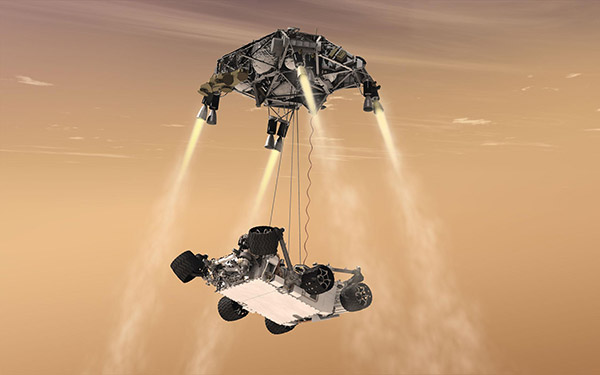
 Just got done reading the first book of James SA Corey’s Expanse series, Leviathan Awakes. In a nutshell, it’s a space opera set in a future where humans have settled the solar system, but are not yet able to reach other solar systems.
Category: books
Cyberpunk
“Every few years there appears a movement to improve or modernize or even “futurize” the writing of science fiction. The classic example was the New Wave, which had an effect on the style of SF literature and has been comfortably tamed and digested. Now there is something called “cyberpunk, ” of which we have yet to learn a clear definition. It has something to do with computers and their programming and possibly— considering the derogatory term “punk “—with snubbing accepted traditions. This short story is said to be an example of “cyberpunk.” It is certainly different from anything H.G. Wells, Jules Verne, or Hugo Gernsback would have dreamed up.” – preface to Pretty Boy Crossover

Science Fiction’s New Wave
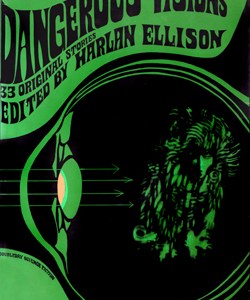
Inferno by Dan Brown
 Inferno by Dan Brown
My rating: 3 of 5 stars
Dan Brown cheats.
I recently finished the draft of a novel I am writing that used multiple points of view like Brown does. I realized I was going to have to throw out a bunch of material I wrote from one character’s point of view just because he KNEW TOO MUCH. Being in his head would have given the mystery away. Better to have him not be a point of view character in the book and remain enigmatic, then to let the reader into his point of view and have him somehow just not think things that would give the game away.
Because people? Don’t control their thoughts. We think what we think.
This is how Dan Brown cheats. In both this book, and The Lost Symbol, he wants to have a big twist at the end where a character or characters are revealed to be more than we thought they were. And he does this by taking us into their heads and just not showing them thinking of things that are no doubt on their minds, like, “How am I going to pull blah-blah-blah off without giving myself away?” That would really be foremost in their minds, I would think.
Sometimes, he has characters think of events in their lives that are later revealed to never to have happened. Were they rehearsing their fake backstories to help pull off the con?
In retrospect, you can see the clues Brown scatters for you throughout the book that reveal the twist, which a twisty story should do, but you also see the cheating attempts at misdirection.
Still, I read Dan Brown because his books are fun. They’re scavenger hunts where the treasures are a copious quantity of well-research archeology and history. But great literature, this is not.
The golden age of Science Fiction
Depending on who you ask, the “Golden Age of Science Fiction,” is either “undisputedly,” or just “widely recognized” as the 1940’s (and possibly 50’s). Of course, one person’s Golden Age is another person’s capital-E Establishment, but historically, the 40’s and 50’s are the era when a younger generation of very talented writers weaned on the pulps and unafraid of speculative-fiction-that-incorporated-science took up pen or typewriter. Among them: Arthur C. Clarke, Ray Bradbury, Tom Godwin, and Isaac Asimov.
It is interesting that of the three biggies I review here (Clarke, Bradbury, and Asimov), Asimov was always my favorite, but (perhaps due to story choices?) this time around, I was much more impressed with Bradbury.
All of these writers are masters of creating fully-realized portraits of everyday life in the future, or on space stations, or the Moon, in very few words. Continue reading “The golden age of Science Fiction”
The Science of Skinny
 The Science of Skinny: Start Understanding Your Body’s Chemistry–and Stop Dieting Forever by Dee Mccaffrey
My rating: 4 of 5 stars
I like science. Books that explain things to me using basic science (and which cite sources) get my attention. This book is written by a chemist. She may swing a little bit to the “nature is perfect” side (it isn’t), but nature is certainly better than anything the money-driven applied-science food industry has to offer.
So this book makes a very sad kind of sense. Applying the lifestyle changes it suggests will take, well, a lifetime, especially for someone like me who has a severe mental block when I am required to mix more than two ingredients together, and thinks it’s inefficient to spend more time preparing a meal than you spend eating it.
So.
But yeah, not a gimmicky nutrition book.
Review of Hidden Cities: My Journey into the Secret World of Urban Exploration
Whenever I read a really good memoir, I always have a moment I pause and think, “Wow, this person [did this thing], AND they are a great writer!” And then I realize chances are they probably got help with the writing part. Nevertheless, this is a really good memoir. Well-written, light-hearted, and fascinating. Definitely a GUY book written by a “guy’s guy” with a GUY point of view, but we are each entitled to our voice.
Pulp (Science) Fiction
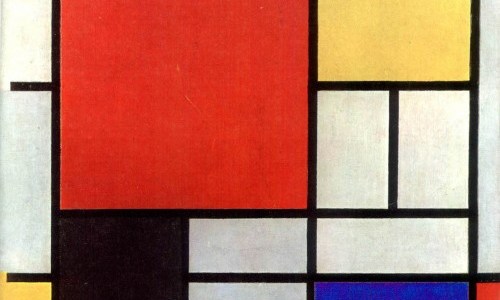
Yeah. So. I might have been a little hasty in my prediction that all 30’s pulp sci fi would be melodramatic. Too much (over)exposure to Captain Proton. That said, the sci-fi of the 1930’s still seems to have an earnest straight-forwardness to it. That is, with the exception of minor details, it does not read as particularly revolutionary to the contemporary eye. But you know, neither does a Mondrian abstract painting.
Looked at from a purely 21st century perspective, your gut reaction to such paintings (or such short stories) is “So what? Lots of stuff looks like that.” Yes. These days. But then you glance at the year the painting or the story came out and contrast it with what passed as popular design or entertainment in its day, and the work is friggin’ revolutionary. Indeed, any one of these stories can be classed as a primordial example of what is now a common sci-fi trope. If H. G. Wells is the grandfather of modern science fiction, these writers are his sons:
The short story of science fiction
In the past couple weeks, I have been reading science fiction short stories. In typical fashion, I have this need to be systematic and thorough, so I am choosing my stories in a chronological fashion. Obviously, I am not reading all of them, just a smattering, but here is the reading list so far:
Poe, Edgar Allen. “The Unparalleled Adventure of One Hans Pfaall”, 1835
Hawthorne, Nathaniel. “Rappaccini’s Daughter”, 1844
Wells, H.G. “The Star”, 1897
Hamilton, Edmond. “The Man Who Evolved”, 1931
Robert Heinlein. “–All You Zombies–” 1959
My descriptions/reviews below are somewhat spoilery in terms of premise and tone, although I don’t out and out describe how the stories end.
The first two stories have been dubbed ‘proto science fiction’ in that they were written well before there was any such genre as science fiction, and were labeled in hindsight as “science fiction-like.” H. G. Wells is the first of this batch to be truly a “science fiction” writer, although he would not have used that term, since it was not invented until the mid-twentieth century.
Girl, Interrupted
 Girl, Interrupted by Susanna Kaysen
My rating: 3 of 5 stars
This book never quite takes a stand on anything. On the one hand, the author implies she was institutionalized for very little reason, then we slowly learn she really did have symptoms of borderline personality disorder, at least as they were understood in 1967. She shows the repeated incompetence of the hospital structure of the time, but this does not seem to be an expose of that. It seems to be a moment-in-time memoir cast with colorful characters, never quite sad enough, or angry enough, or satisfied enough, or anything enough.

